Snow Sensory Bin Ideas: 11 Trays to Set Up With Instant Snow

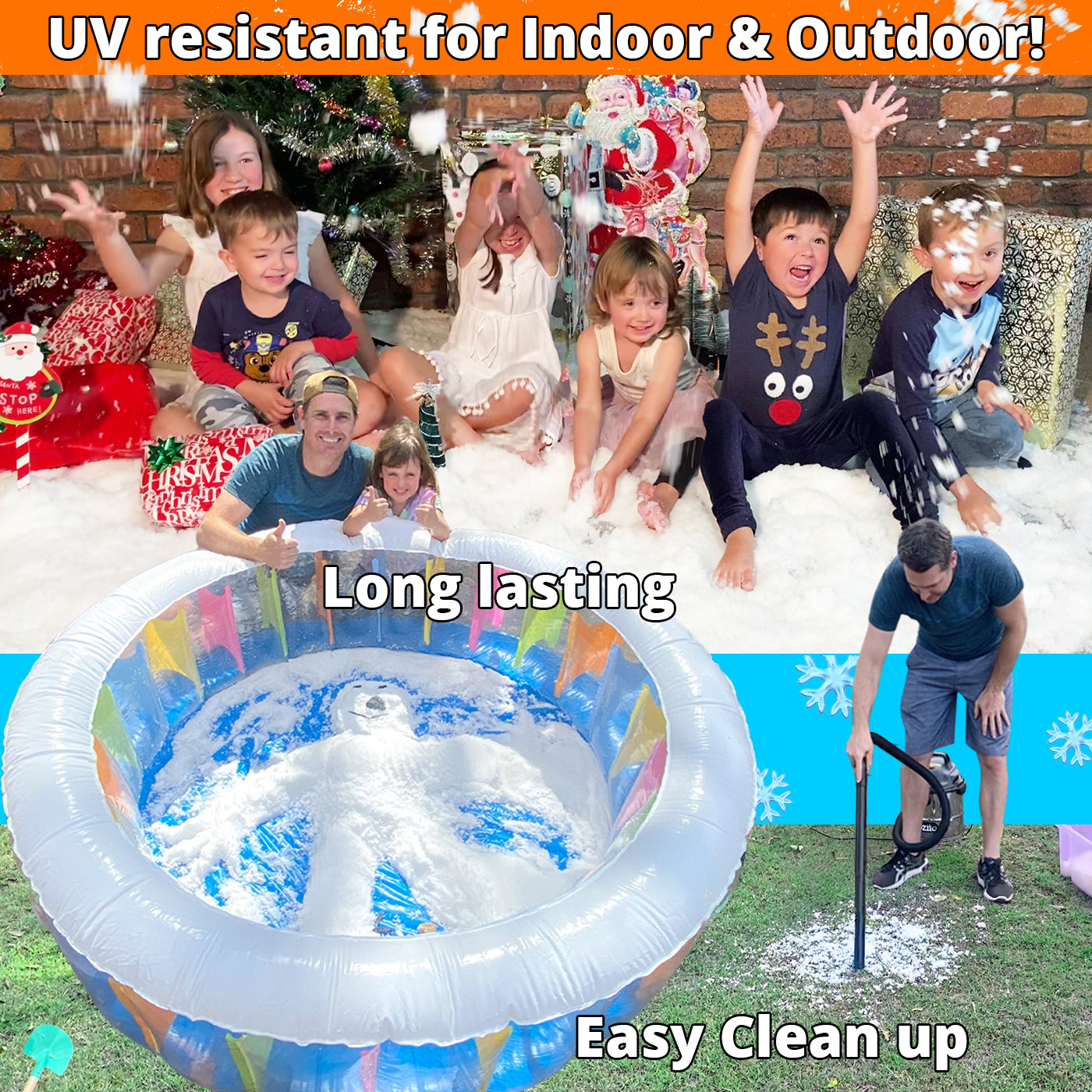
A snow sensory bin is a tray of snow with a few toys, scoops and molds added, then left for the kids to play and create with. The snow does most of the work. Party GOAT Instant Snow suits sensory bins better than most fillers because it looks and feels like real snow, is cool to the touch, and you can change its texture to suit the activity. Add less water for a drier snow that sifts through fingers like powder snow. Add a little more and it holds its shape when squeezed and pressed into molds. Unlike the homemade recipes, it is still snow at the end of the session rather than paste. And because it is a potassium polyacrylate with a UV stabilizer, it plays outdoors as well as in, and keeps looking like snow in direct sun, where most instant snow breaks down into a sticky goo within an hour. It also grows in front of them, which is a sensory activity on its own.

Below: the recipe for one tray, what to put in it by theme, eleven trays to set up, how long a tray lasts, and what to do at the end. Everything here uses the same snow as our games and experiments; those are on the Snow games and activities page.

How to make sensory snow for one tray

A 24 x 24 inch tray takes about 2½ gallons of snow. Put 6 oz (170 g) of Instant Snow powder in the tray, pour on 1.2 gallons (4.6 L) of plain tap water, and it grows in under a minute. Fluff it up and spread it out. That is the whole sensory snow recipe; no shaving cream, no conditioner, no baking soda.

The rule at any size is half a gallon of water and 2½ oz (71 g) of powder for every gallon of snow, so a smaller tub for one child takes about a gallon. Pour the water onto the powder, not the other way around, and err on the dry side; a drier mix looks and feels most like real snow. If you want the snow to pack into shapes for molds, sprinkle in a little more water and mix it through. The full ratio table, spoon counts and a video are on the Instant Snow instructions page.

Snow for common tray and table sizes, about 1 inch deep:

Swipe sideways to see the whole table.

Tray or tableSizeSnowPowderWater
Classroom sensory bin, small18 x 12 inabout 1 gallon2½ oz (71 g)½ gallon (1.9 L)
Under-bed storage bin26 x 17 inabout 2 gallons5 oz (142 g)1 gallon (3.8 L)
Square play tray24 x 24 inabout 2½ gallons6 oz (170 g)1.2 gallons (4.6 L)
Large under-bed bin (60 qt)35 x 19 inabout 3 gallons7½ oz (213 g)1½ gallons (5.7 L)
Classroom sand and water table36 x 24 inabout 4 gallons10 oz (284 g)2 gallons (7.6 L)
Tuff tray (octagonal)40 in (100 cm) acrossabout 5½ gallons14 oz (400 g)2¾ gallons (10.5 L)

For any other tray, allow about 2½ oz (71 g) of powder for every square foot of tray at 1 inch deep, or spread it thinner and it goes further. An inch deep is enough for digging and molding. For hills, tunnels and snow mounds, allow half as much again.

Make it in the tray in front of the children. The powder swelling into snow is the first activity of the day, and is an exciting way to start the snow play.

What to put in a snow sensory bin

Start with the snow, then add three kinds of things: something to scoop and pour (spoons, cups, a small sieve), something to hide and find (toys, counters, letters), and something that sets a scene (polar animals, mini trees, trucks). Change the scene to match what the children are into that week.

Swipe sideways to see the whole table.

ThemePut in the trayWhat the kids end up doing
Arctic animalsPolar bears, penguins, seals, a few blue glass gems or ice cubes for waterSmall world stories, sorting land and sea animals
Construction siteToy snow plows, dump trucks, front loaders, a few blocksPlowing roads, loading and dumping, clearing a path
Snow racewaySmall cars, a spoon to carve trackCarving tracks and tunnels, racing
ChristmasMini trees, baubles, bells, a tiny villageDecorating, hiding and finding ornaments
Treasure huntLetters, numbers, counters, buttons, small dinosaursDigging, matching, counting what they find
Frozen toysDisney Frozen themed toys: Elsa, Anna, Olaf, Kristoff and SvenRescuing the toys buried in snow, small world stories
Rainbow snowSnow made with a drop of food coloring in the water, one color per batchMixing colors, layering, scooping
KitchenCups, bowls, a whisk, an ice cream scoopSnow cones, cakes, serving the family
ShapesLow sand molds: animals, shapesCreate, mold, shape

Keep the small parts for children who are past the mouthing stage. Instant Snow is for ages 3 and up with adult supervision.

11 snow sensory bin ideas
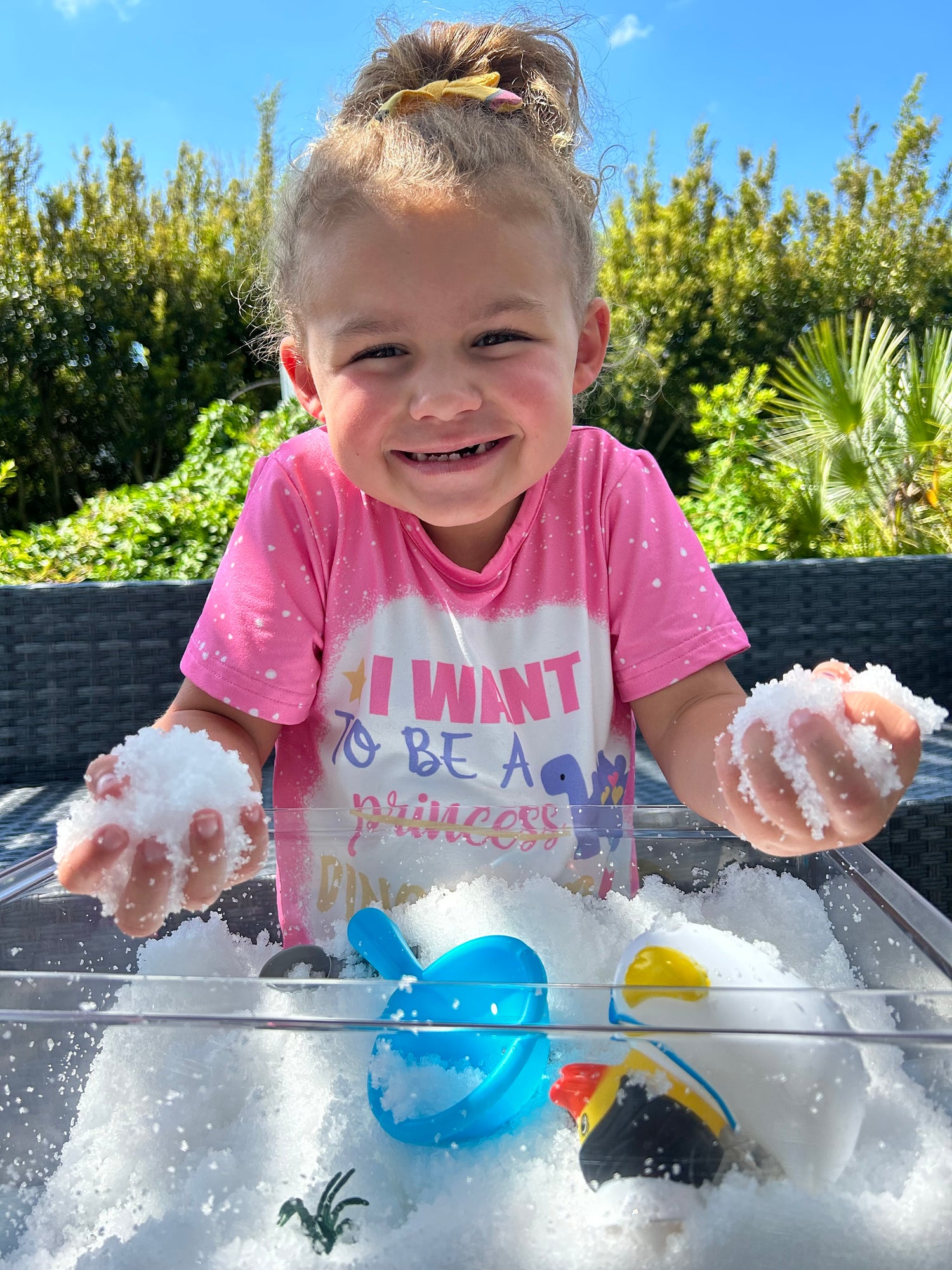
sensory play ideas with instant snow

The plain snow tray

  • Fill a tray with snow and nothing else for the first ten minutes.
  • Let them squeeze it, sift it, pat it flat and notice that it feels cool.
  • Add scoops and cups once they have explored it with their hands.
  • Tip: run this tray first with a new group. Everything after it goes better once the novelty has worn off.
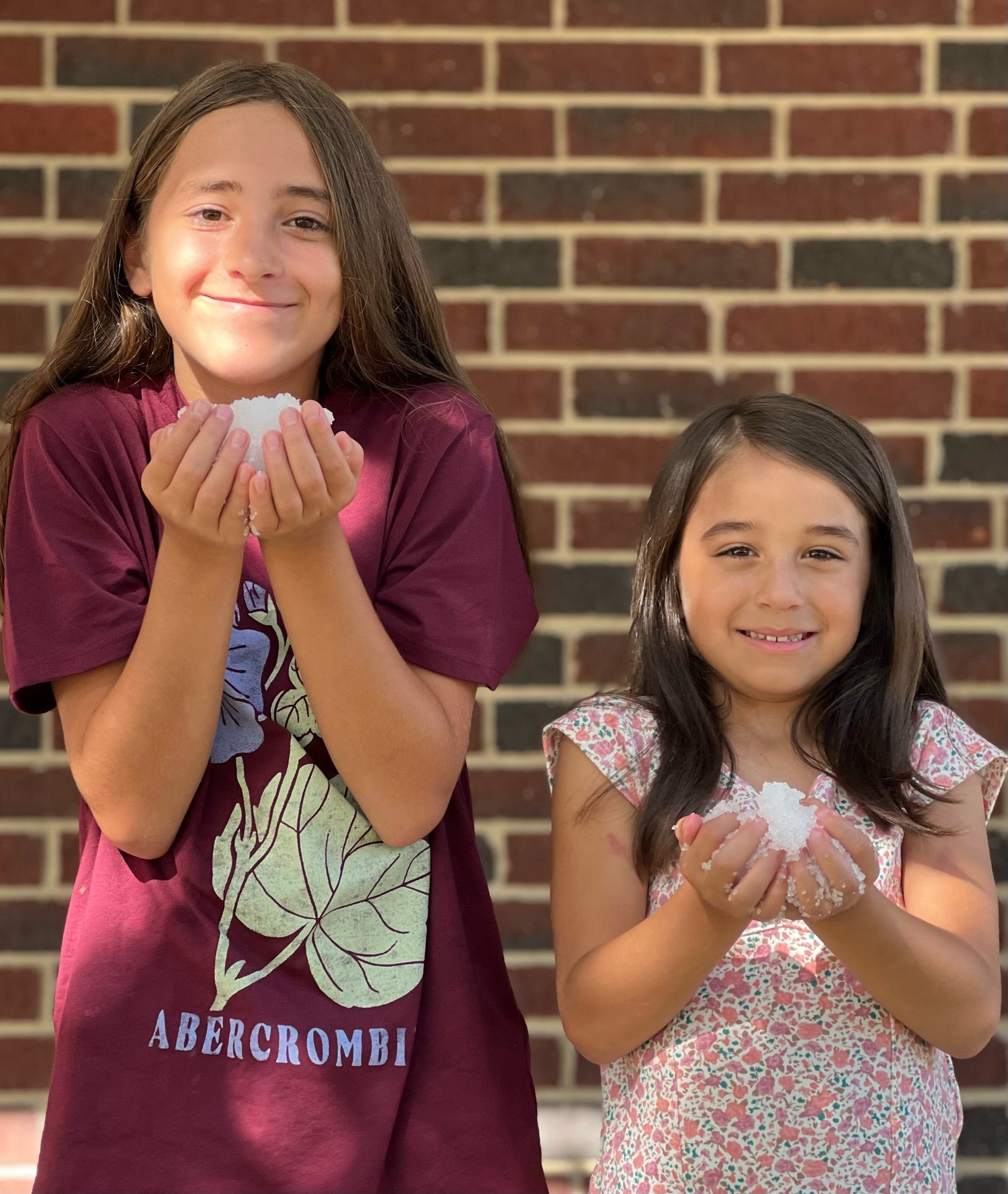
fake snow games and activities

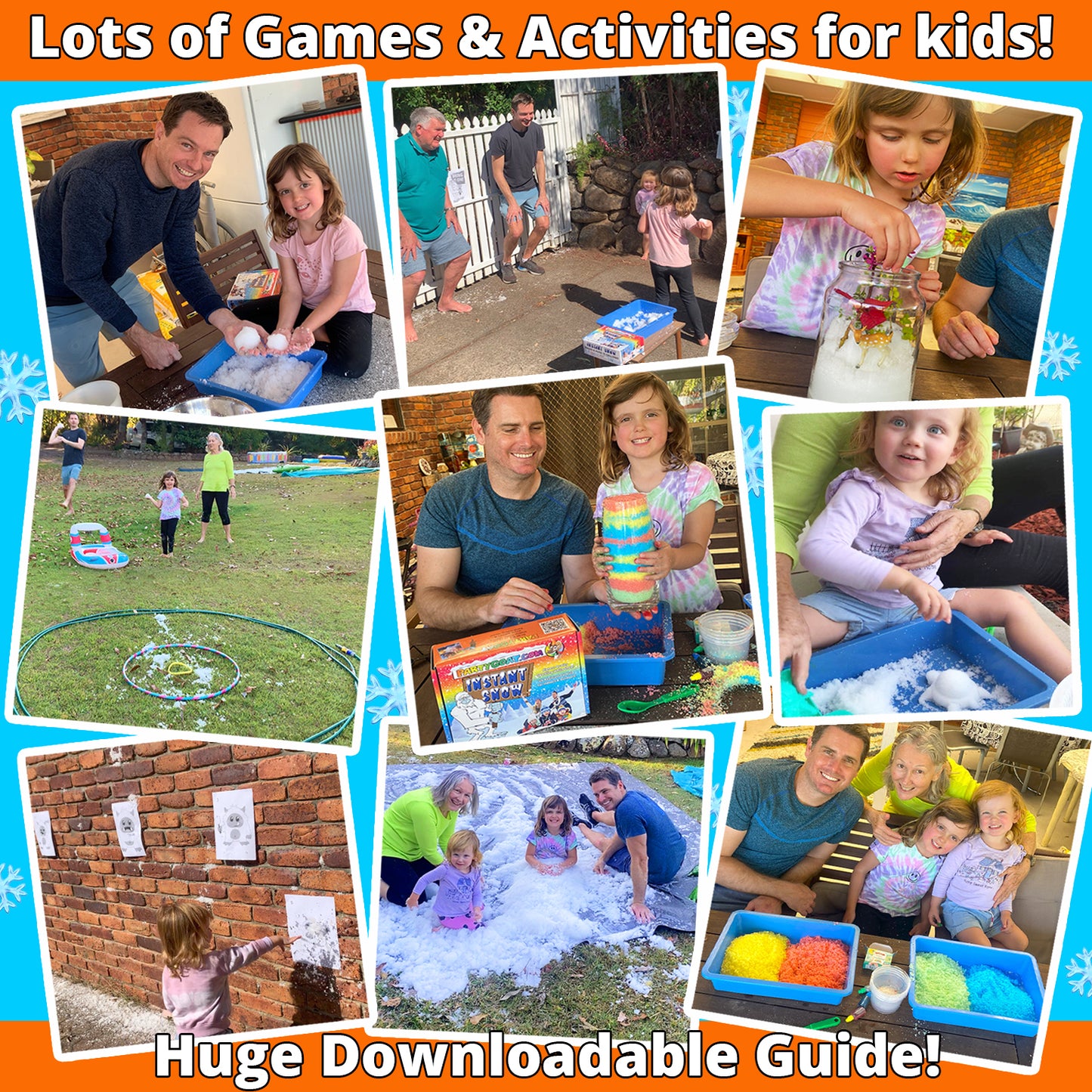
Grow snow in their hands

  • Each child cups their hands over the tray.
  • Drop in a spoonful of powder and slowly pour water on top.
  • Watch it spill over their fingers. Then the handful goes into the tray and the tray grows.
  • Teaching point: the powder soaks up water and swells. The science is on the Snow games and activities page.
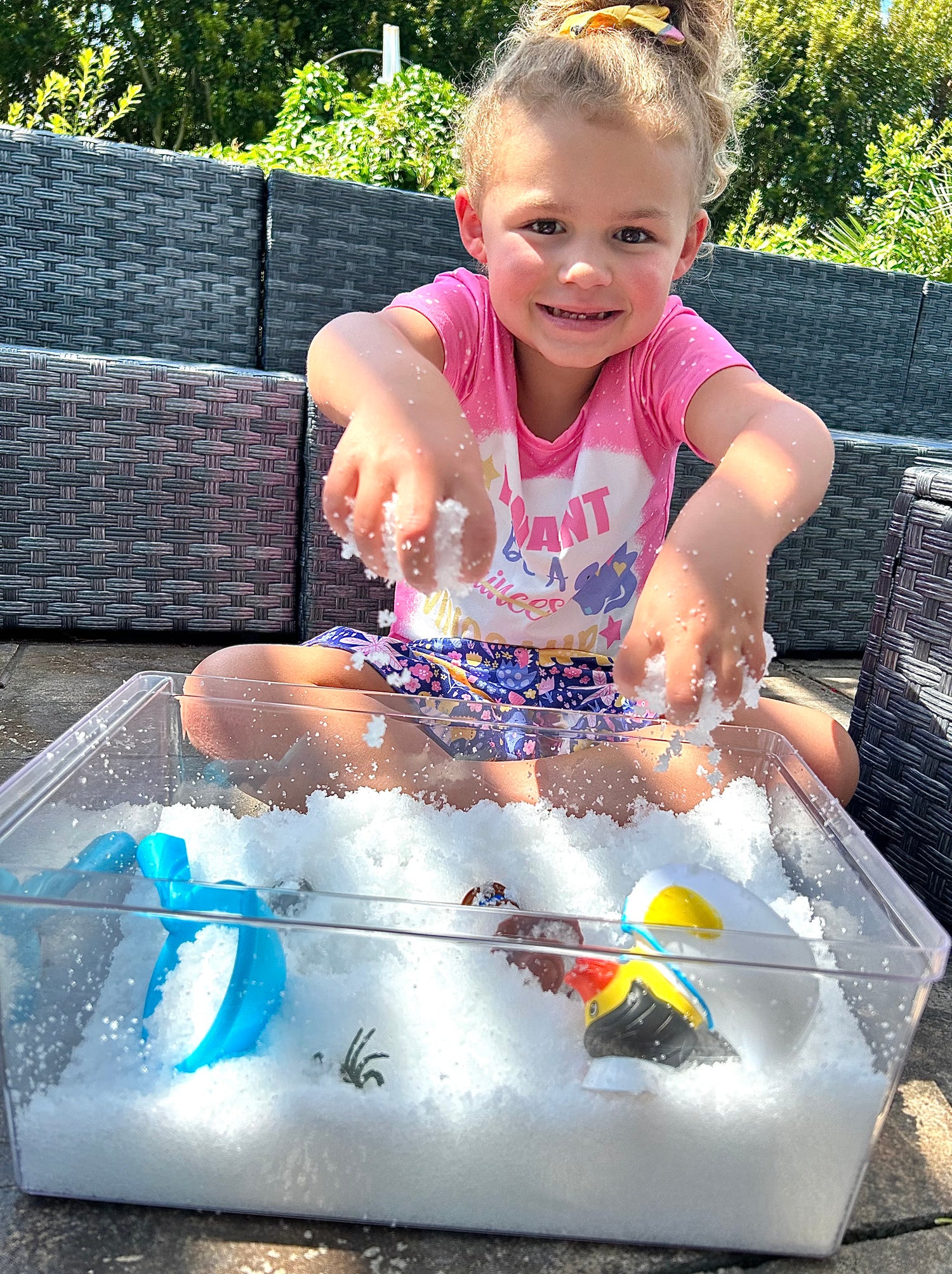
Snow animals small world

  • Add the snow animals: polar bears, penguins, walruses, a narwhal, a snowy owl, an Arctic fox, and the forest crowd (moose, elk, reindeer, a snow leopard). They do not all have to be Arctic; any winter animal that looks at home in snow works.
  • A few blue glass gems or ice cubes make the water's edge.
  • Pile the snow into a hill for the bears and flatten a patch for the penguins.
  • Fun fact: polar bears live in the Arctic and penguins in the Antarctic, so in real life they never meet. In the tray, they can.

Snow plow construction site

  • Toy snow plows, dump trucks and a front loader.
  • Pile the snow at one end and set them the job of clearing a road to the other.
  • Blocks make buildings to plow around.
  • Want the big version, with a child on a ride-on digger in a pool of snow? That is on the Snow games and activities page.

Snow raceway

  • Carve a track through the snow with a spoon.
  • Add tunnels, hairpins and a snow bank to crash into.
  • Race two cars and see which reaches the end.
  • The full-size pool version is on the activities page.

Christmas tray

  • Mini trees, baubles, bells and a tiny village.
  • Bury the baubles and set a hunt, or let them build the village.
  • The snow glistens under fairy lights, so the tray doubles as a decoration between play sessions.
instant snow activities and games party goat

Buried treasure hunt

  • Hide letters, numbers, counters or small dinosaurs in enough snow to cover them.
  • Give a list of what to find and tick them off.
  • For preschool: find the letters in your name. For kindergarten: find a number and that many buttons.
  • Fun fact: woolly mammoths have been found preserved in permafrost, ground that never thaws.
Frozen small world

  • If there are Frozen toys in the house, this is their tray. Pile the snow into Elsa's ice palace, with a hill behind it for Sven to pull the sled up.
  • Use building blocks to create a castle, flatten a path to the door, and sprinkle snow on everything.
  • Bury Olaf somewhere in the tray and send Anna to find him.
  • A few blue glass gems make the frozen lake.

Rainbow snow play tray

  • Add a few drops of food coloring to a cup of water, then make a small batch of snow with it. Repeat for each color.
  • Put the colors side by side in the tray and let them scoop, mix and layer.
  • Teaching point: which two colors made each new one?
  • The same colored snow stacked in a jar makes the rainbow snow art on the activities page.

Snow kitchen

  • Cups, bowls, a whisk, an ice cream scoop and a muffin tray.
  • Snow cones, birthday cakes, soup for the polar bears.
  • Slightly wetter snow packs into the scoop and holds its shape on the plate; sprinkle in a little water if it crumbles.

Snow molds

  • Low, flat sand molds work best: a crab, a whale, a turtle, a starfish, anything a few centimeters high. Tall castle buckets crumble.
  • Sprinkle in a little extra water until a squeezed handful holds together, then press the snow into the mold firmly and lift the mold straight off.
  • Make each shape where you want it to sit. A molded shape stays put but it will not survive being picked up and moved, and stacking one on another breaks the one underneath (a snowball, yes; a snowman, no).
  • Squish them flat and go again. The snow goes straight back into the tray, so there is nothing to top up.
  • Cookie cutters work too, flat in the tray: press one into a patted-down patch, jiggle it a little or clear the snow away from the outside, and lift it off to leave a star or a heart lying in the snow.

Winter sensory table ideas for preschool and kindergarten

A classroom sand and water table takes 2 to 4 gallons of snow at an inch deep, depending on its size (the sizes table above has the common ones), so a 7 gallon pack fills a table with a refill to spare and a 15 gallon pack runs multiple sessions. To make cleanup easier, set the table up on a groundsheet. For safety, clean up any large spills quickly and don't walk or run through the snow; Instant Snow is slippery on hard floors. Keep the dry powder in the cupboard out of reach of children.

Keep the same snow and change what goes in it to keep a class interested: a plain tray for the first session, then a themed tray with a learning hook (letters in the snow, counting buttons, sorting animals), then an open-ended play tray (scoops, cars, molds). Cover the tray between sessions, and swap in a fresh batch once the snow has had a good workout.

Get the free printable Instant Snow Activity Guide

Every pack comes with a free printable Activity Guide: more than 20 snow games, science experiments and classroom activities, plus yeti target posters. Enter your email and we'll send it to you.

How long does sensory snow last?

Covered, a tray of Instant Snow keeps its look and comes out again the next day. Making it is quick and the kids like watching it grow, so most people mix it at the start of play. If you would rather make it ahead, keep it covered so dust stays out and bring it back out tomorrow. Uncovered, the snow can dry out or take in moisture from the air, and its texture changes over time. Swap in a fresh batch once the snow has had a good workout.

Cleaning up a snow sensory bin

Tip the tray into the bin, or spread the snow in a garden bed away from foot traffic; Party GOAT Instant Snow is made from potassium polyacrylate, the same base material farmers use to help soil hold water. Vacuum any snow that reaches the floor straight away, before anyone walks through it. Avoid washing large amounts down the drain. Full cleanup steps are on the Instant Snow instructions page.

Fake snow for sensory bins: which pack to get

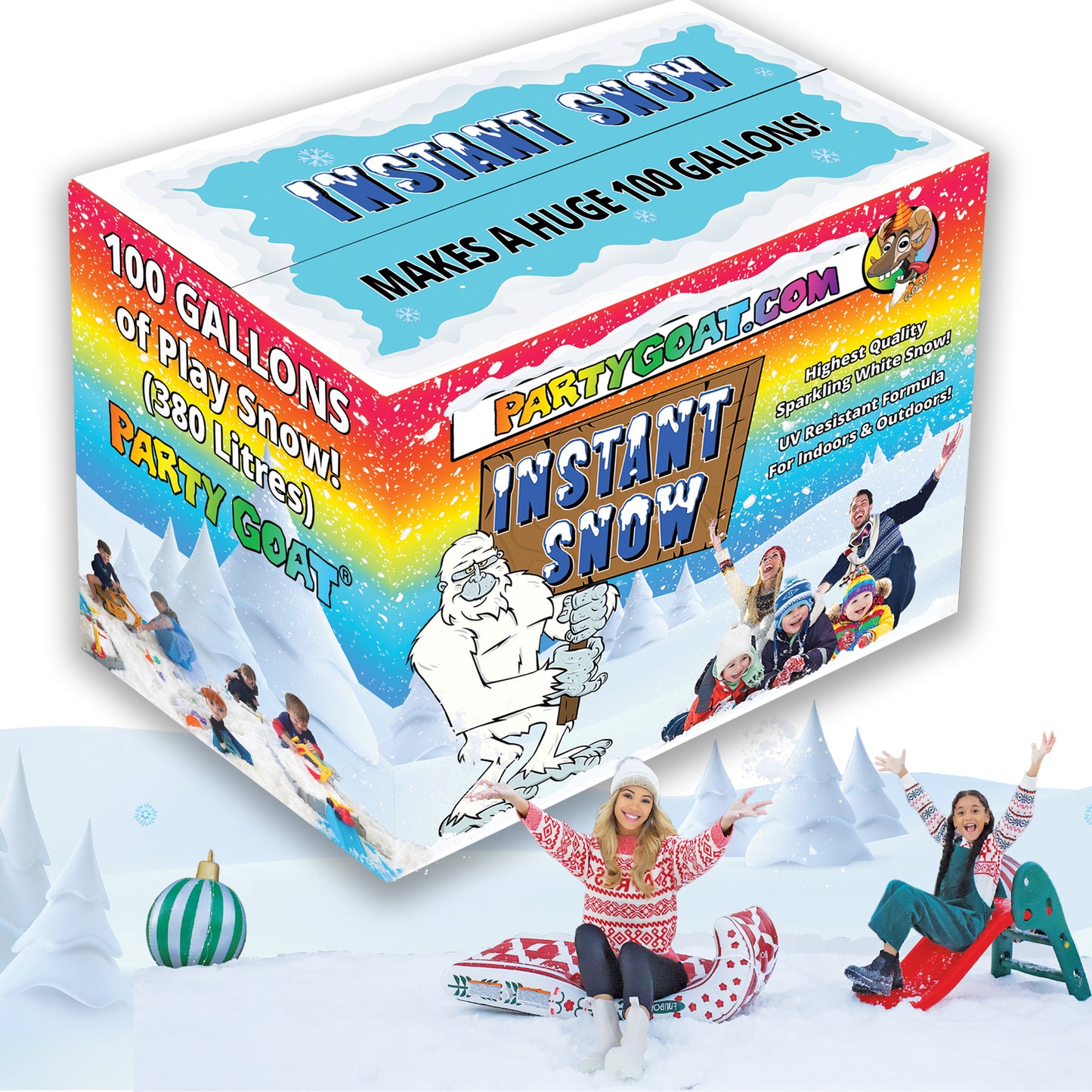
One 24 x 24 inch tray is about 2½ gallons of snow, so a 7 gallon pack is about three small trays, or one classroom sensory table with a refill to spare. A 15 gallon pack is six small trays, or two to three full-size tuff trays, and the 100 gallon pack runs a whole early learning center for the season. Those figures are for a flat inch of snow; if you want hills to dig into and mounds to flatten, allow half as much again. Larger packs cost less per gallon, and the same ratio applies at every size.

Snow sensory bin FAQs

What is a snow sensory bin?

A snow sensory bin is a tray or tub filled with fake snow and a handful of toys, scoops and molds for open-ended play. Instant Snow suits it because it looks and feels like real snow, feels cool, and holds its shape, so children can dig, mold, hide and find things in it. Cover the tray between sessions, and swap in a fresh batch once the snow has had a good workout.

What do you put in a snow sensory bin?

Start with the snow, then add something to scoop (spoons, cups, spades), something to hide (letters, counters, small toys) and something that sets a scene (polar animals, trucks, mini trees). Change the theme to match what the children are learning: an Arctic scene one week and a construction site the next.

How do you make sensory snow?

Put 6 oz (170 g) of Party GOAT Instant Snow powder in a 24 x 24 inch tray and pour on 1.2 gallons (4.6 L) of water. It grows into about 2½ gallons of snow in under a minute. Fluff it up and spread it out. No shaving cream, conditioner or baking soda needed.

How much fake snow do I need for a sensory bin?

About 2½ gallons of snow for a 24 x 24 inch tray, which is 6 oz (170 g) of powder, or about a gallon for a small tub for one child. A 7 gallon pack is about three trays. A classroom sand and water table takes 2 to 4 gallons depending on its size, and a 15 gallon pack covers about 24 square feet at 1 inch deep.

How long does sensory snow last?

Covered, a tray keeps its look and can be reused. Uncovered, the snow can dry out or take in moisture from the air, and its texture changes over time. It will still look like snow for a while but may not feel as nice to play with. Swap in a fresh batch once the snow has had a good workout.

Is a snow sensory bin safe for toddlers?

Party GOAT Instant Snow is for ages 3 and up with adult supervision. It is non toxic: not classified as hazardous, and toy safety tested by a CPSC-accepted laboratory with no heavy metals or phthalates detected. Eating it is unlikely to cause harm but should not be encouraged, so it is not a tray for children who still mouth things. For safety, clean up any large spills quickly and don't walk or run through the snow; Instant Snow is slippery on hard floors. Keep the dry powder in the cupboard out of reach of children.

Is instant snow better than baking soda or shaving cream snow for a sensory bin?

The homemade recipes are fun for an afternoon, but they are wet, they leave residue on hands and toys, and they are finished when the session is. Instant Snow looks and feels like real snow, holds its shape, and a covered tray comes back out tomorrow. It also grows in front of the children, which is an activity in itself.

Can I use instant snow on a sensory table?

Yes. A classroom sand and water table takes 2 to 4 gallons of snow at an inch deep, depending on its size, so a 7 gallon pack fills it with a refill to spare. Put the table on a groundsheet to make cleaning up spills easier or set the table up outside on the grass, where small spills can be hosed in.